


This title is a little misleading, because I am really only starting with the Top 50 contracts in baseball in terms of AAV. However, I believe it makes sense to start there and then dive deeper into further writing.
Major League teams generally pay around $8 million per WAR for talent in free agency. For example, after signing a 15-year, $765 million deal with the Mets (average $51M/year), Juan Soto would need to produce roughly 6.4 WAR per year to justify his salary (since 6.4 × $8M ≈ $51M ). In my analysis, we use this $8M/WAR metric to gauge each player’s annual value. We take each player’s 2025 AAV from the spreadsheet and their 2025 WAR. Multiplying WAR by $8M gives an estimated dollar value of that performance. The surplus/deficit is simply this value minus the salary:
Dollar Value = bWAR × $8,000,000
Surplus/Deficit = Dollar Value – Salary
For instance, if a player had 5.0 WAR and an $20M salary, their value would be ~$40M, yielding a +$20M surplus. Conversely, a player with 0 WAR (replacement-level or injured) and a high salary would be a significant deficit (essentially, the entire salary is “wasted” value).
So let’s take a look at whose contracts are best.
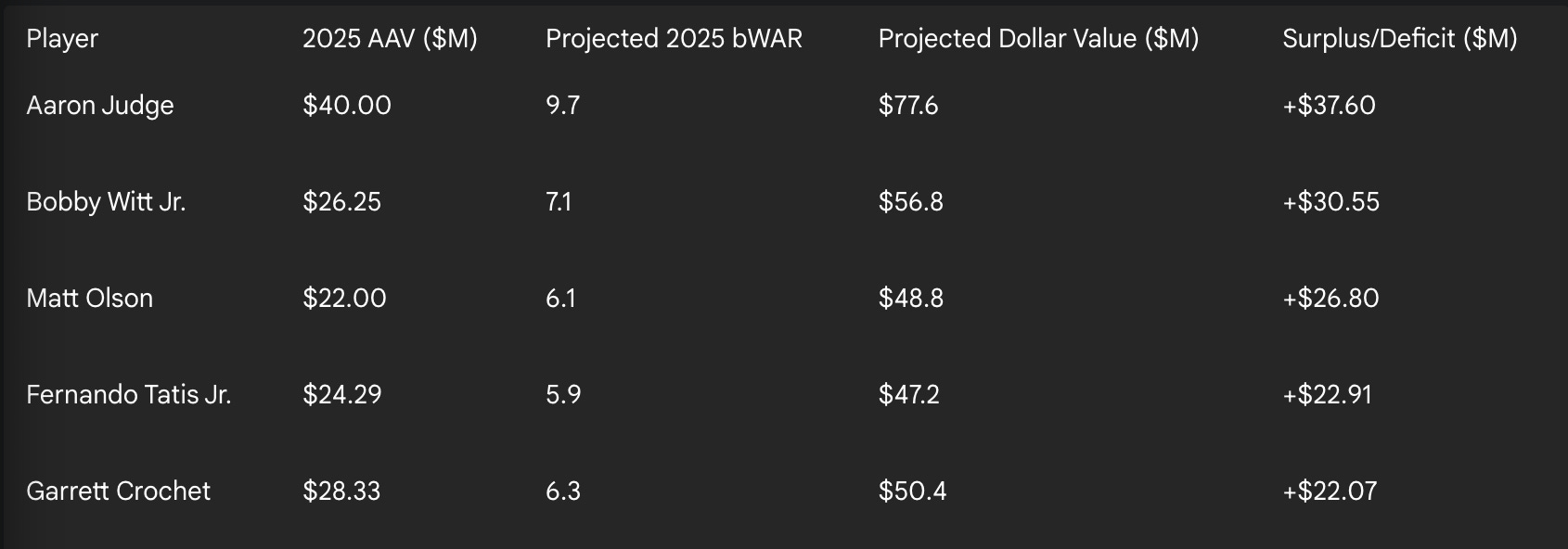
More Bang Than Bucks (>$20M Surplus)
These players deliver MVP-caliber production at a cost far below their on-field value. Aaron Judge being the best player in baseball and also outplaying his contract by $37,000,000 might be his most impressive feat thus far.
Crochet led all pitchers on this list. However, if we were to add Skubal, who was just outside the Top 50, then he would surpass Crochet by a few million.
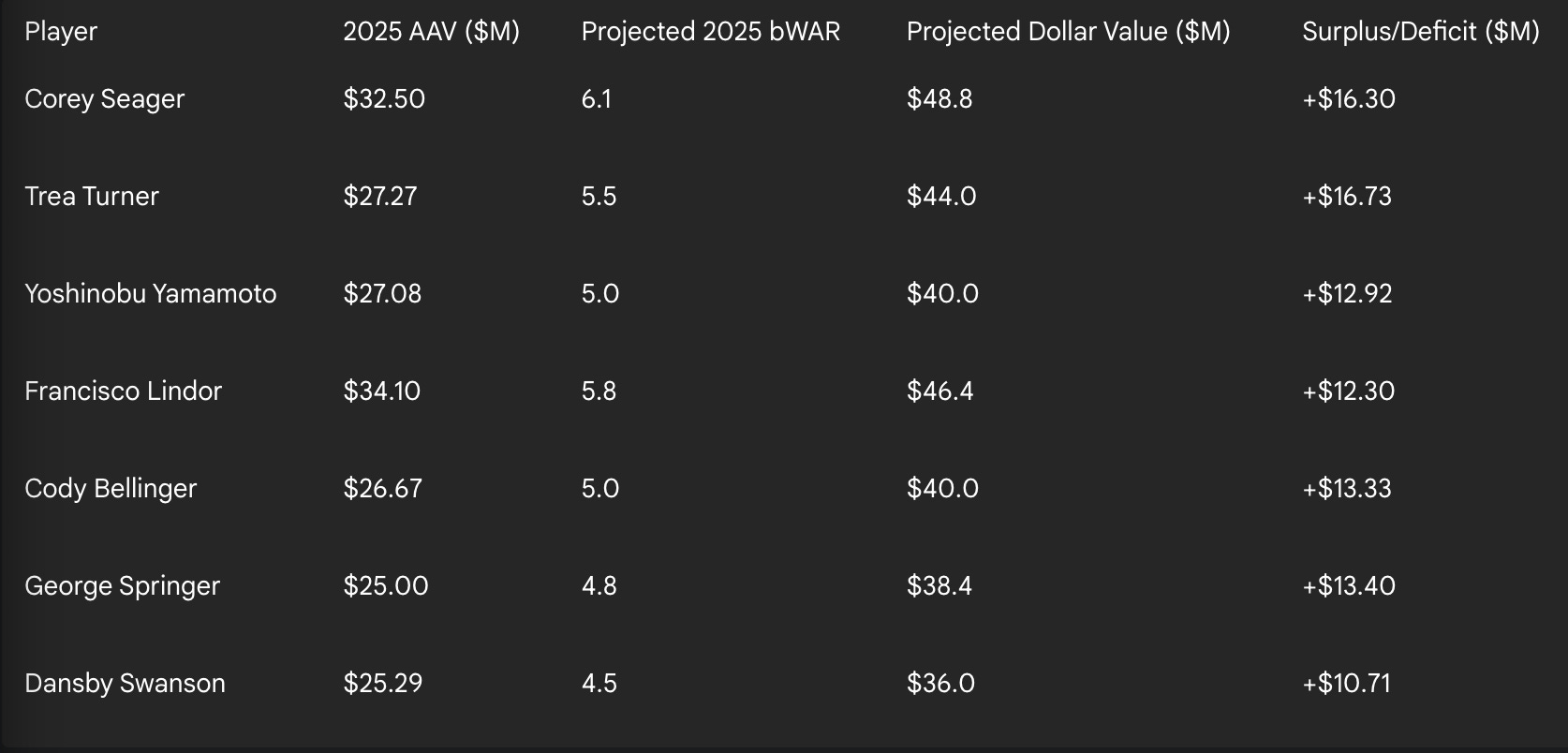
Outperforming the Paycheck ($10M to $20M Surplus)
This tier is filled with elite players on massive contracts who are still managing to provide strong positive value. To me, the biggest surprise here is probably Dansby Swanson. I was very critical of the signing three years ago, but thus far, he has earned his money and then some.
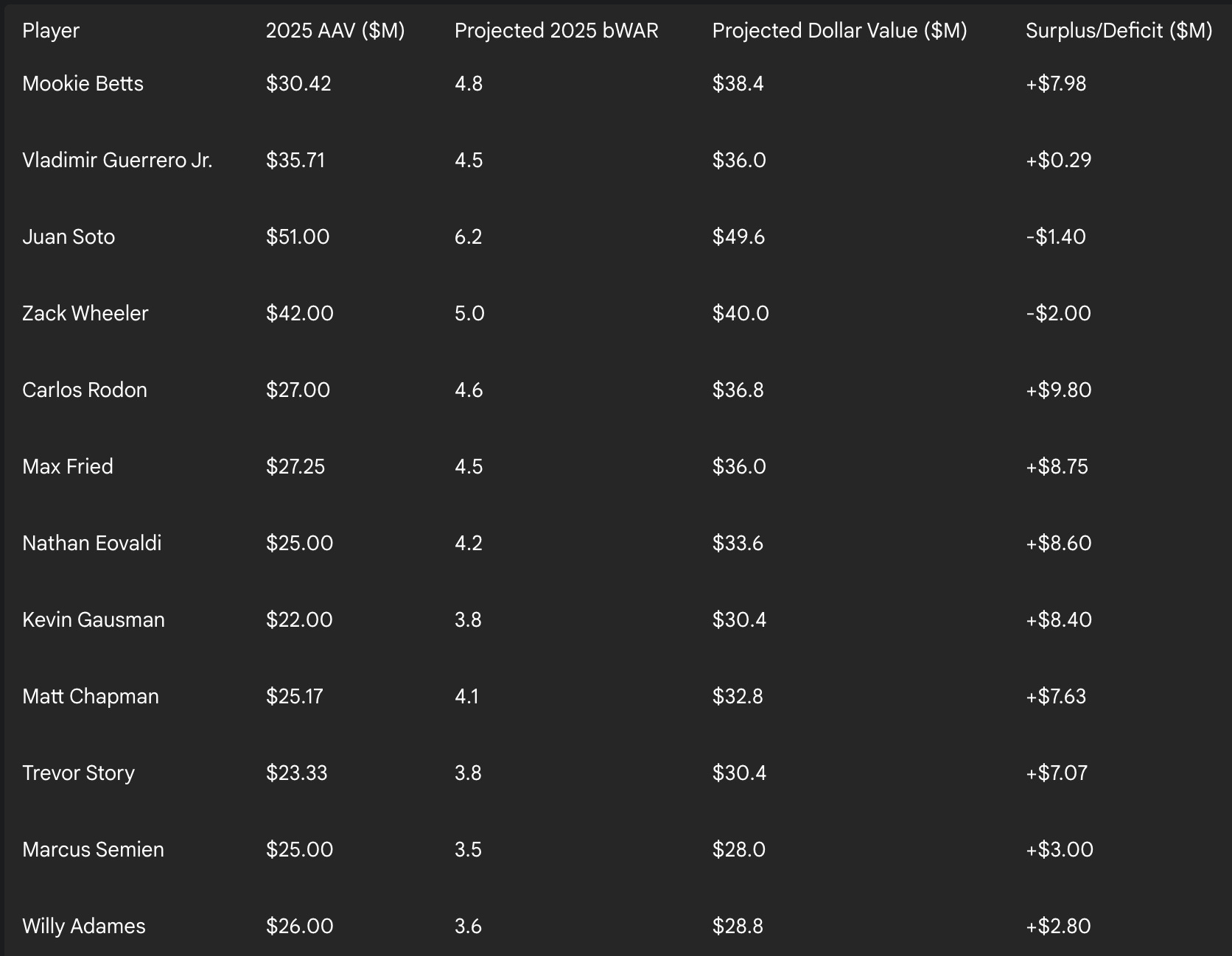
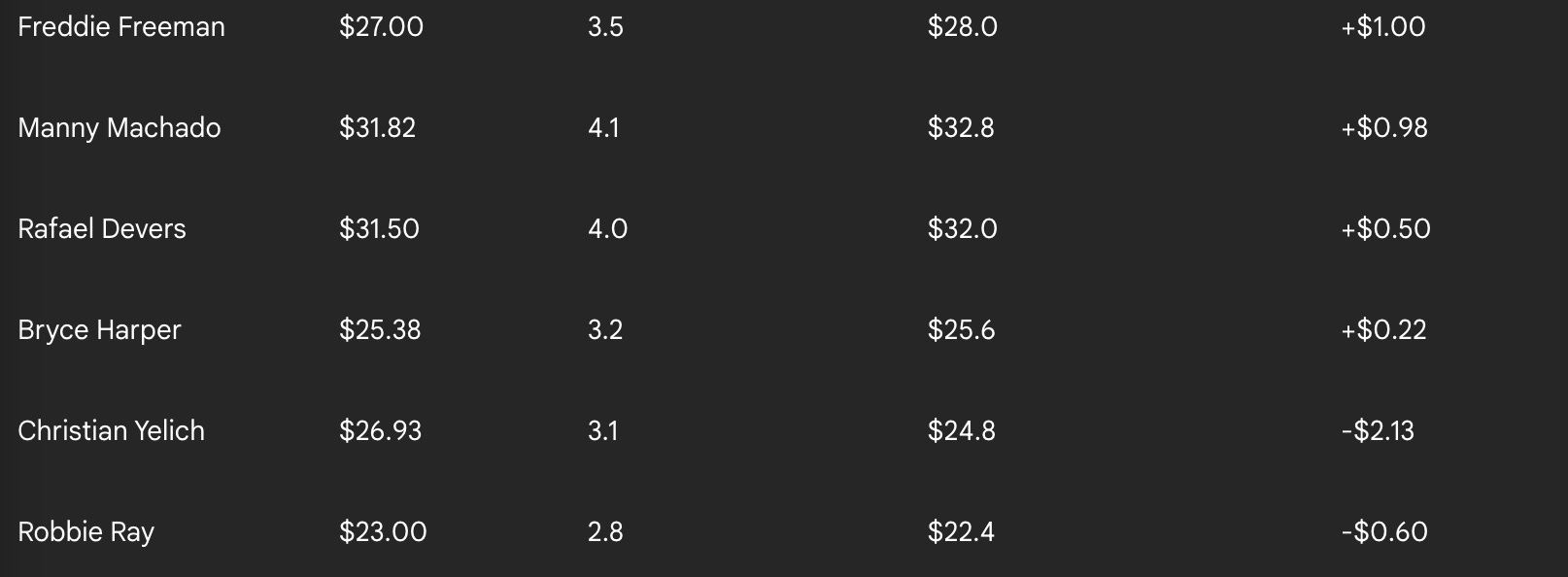
The Market Rate Performers ($0M to $10M Surplus)
These players are performing almost exactly in line with what their contracts dictate. This is where we start to see many stars on big contracts barely breaking even for their teams.
The Ohtani Anomaly
I didn’t really know where to put Ohtani in this list. Yes, his AAV is the highest of any player, but we all know his contract is very wonky. While this single-year analysis shows a slight deficit against his AAV, it doesn’t take into account all the other revenue that Ohtani brings the Dodgers.
That is something not accounted for in any of these players, but it really stands out for Ohtani because of the Japanese sponsors he brings in.

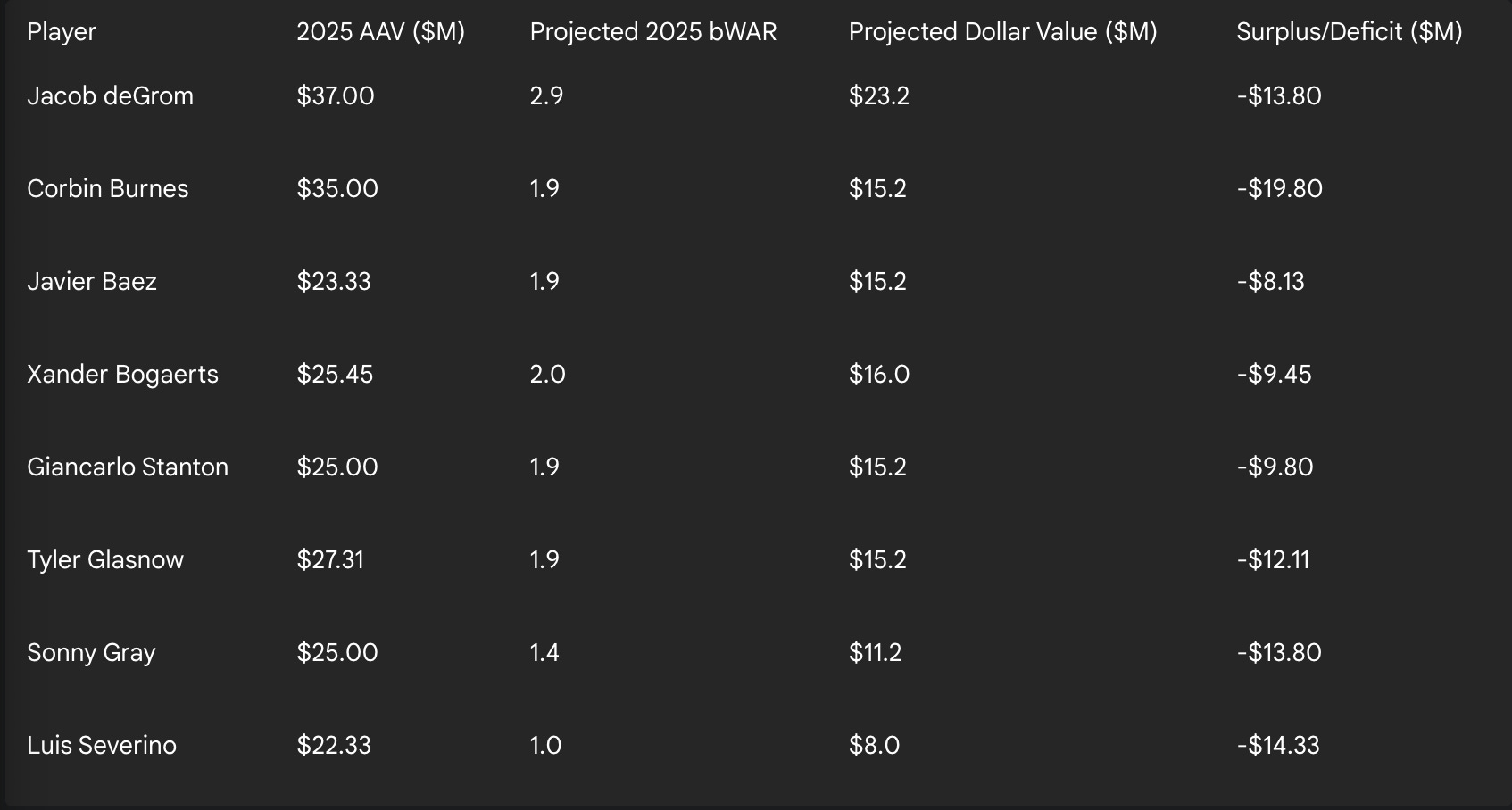
The Underperformers (-$5M to -$20M Deficit)
This group consists of highly-paid players whose production has dipped below their salary level. This is due to a combination of age, injury, or decline in performance. While not yet downright disastrous, these contracts are a growing concern for their teams.
The Rejects (< -$20M Deficit)
You would think that the majority of these players on this list would be injured. You would be wrong. The only two players who did not see any time this year were Gerrit Cole and Anthony Rendon. Outside of that, everyone touched the field.
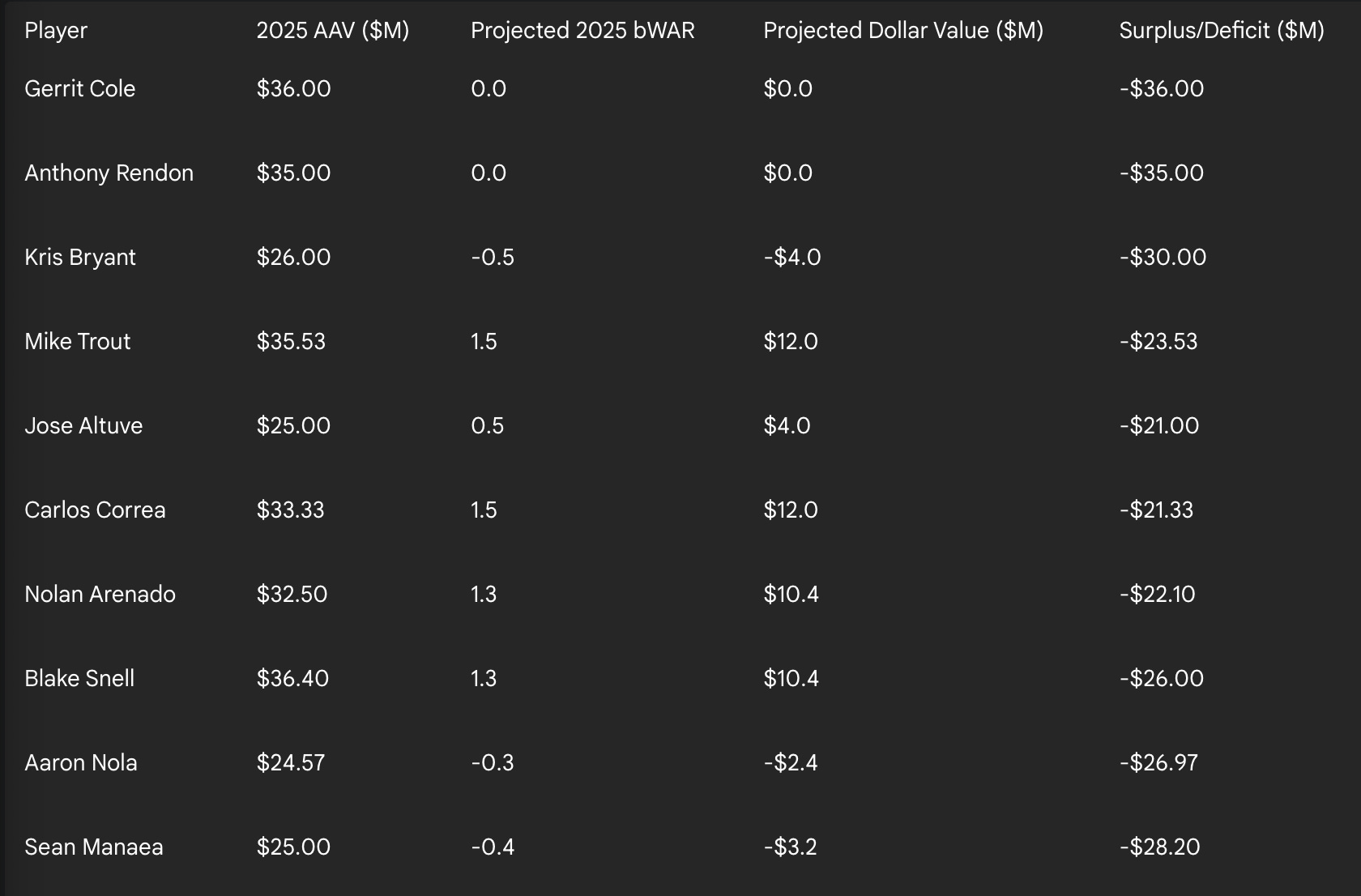
I plan on doing some more blogs like this, where we break down contracts. If you had a gun to my head, I would say the Kris Bryant deal is the worst on here. Sean Manaea is a close second, but his deal was only for three years.
Looking back, Yamamoto truly did outperform his paycheck.